The Real Cost of Clinic Admin in Ontario: Do It Yourself, Add an MOA, or Bring In Outside Help?
Ask an Ontario physician what fills their evenings and the list is familiar: inbox messages, forms, referrals, faxes, schedules and payroll. The admin load keeps growing, it costs money, and every hour spent on it is an hour not spent with patients.
The numbers back this up. Ontario family doctors report spending about 19.1 hours a week on administrative work, roughly 40% of an average 47.7-hour week, and 94% say they are overwhelmed by administrative and clerical tasks. Across Canada, physicians report spending 10.4 hours a week on admin.
So what are the real options for a clinic owner? This guide looks at three: doing it yourself, bringing on another MOA, or working with an outside admin team, and why the location of that team matters in Ontario.
How big is the admin load?
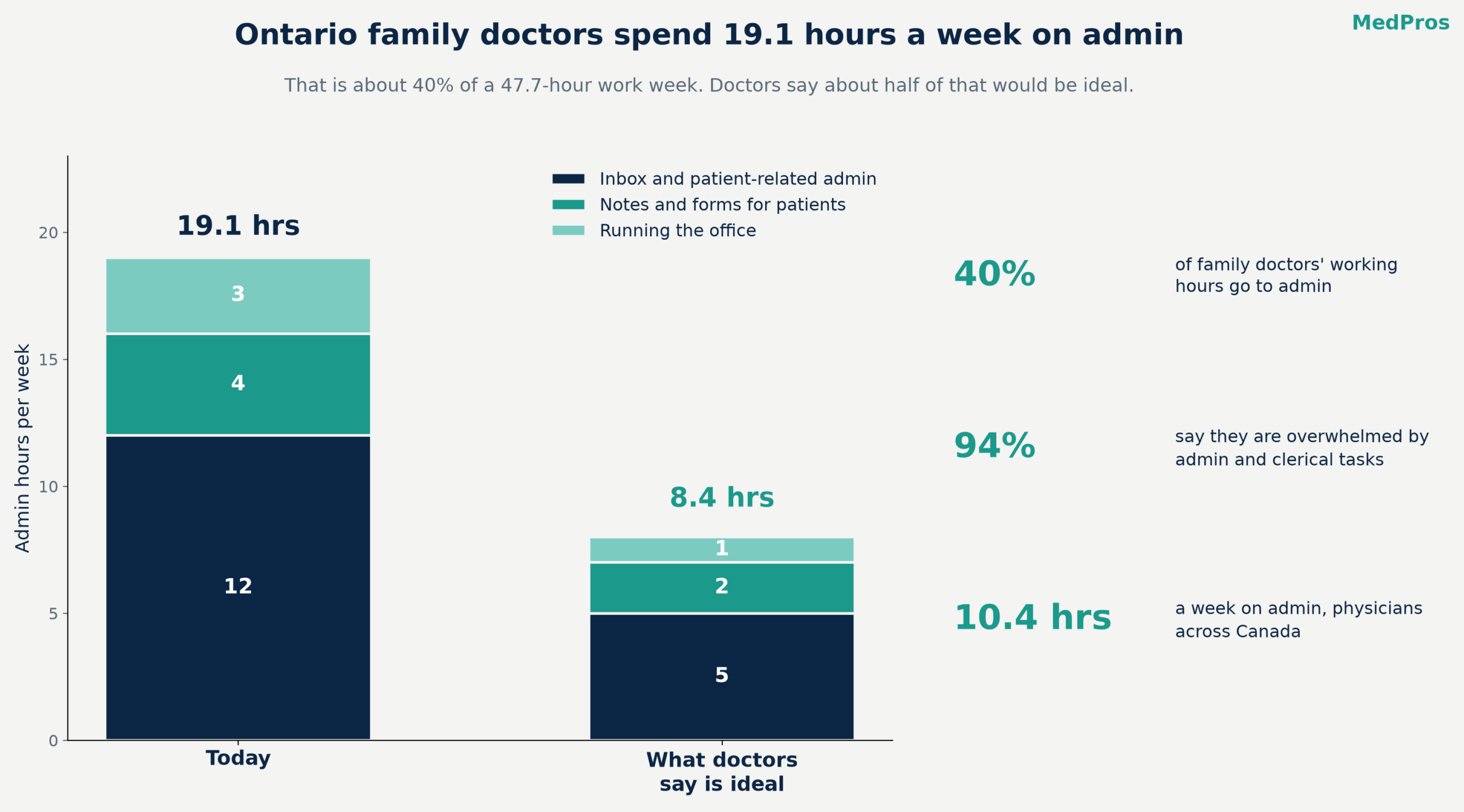
The biggest slice is inbox and patient-related work. It lands on the physician because, in many clinics, no one else clearly owns it. Across Canada, 64% of physicians say they spend a significant amount of time on EMRs outside regular hours, and 77% name reducing administrative burden as a top way to recruit and keep doctors.
The true cost of doing it yourself
Doing admin yourself feels free because no invoice arrives. The cost shows up as time: evenings, weekends and appointment slots that never open.
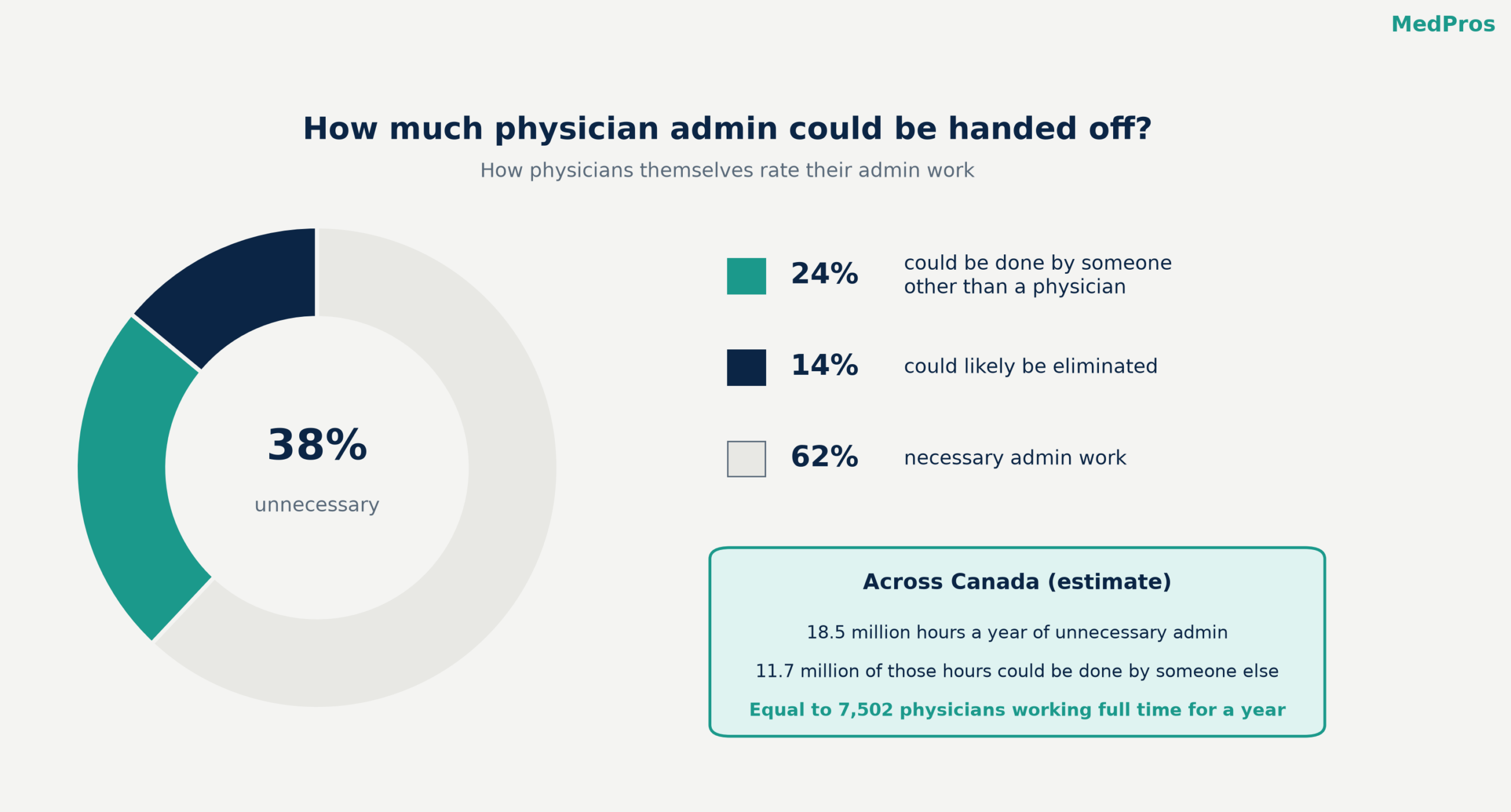
When physicians assess their own admin work, they judge 38% of it unnecessary: 24% could be done by someone other than a physician, and 14% could likely be eliminated. Applied across Canada, that adds up to an estimated 18.5 million hours a year of unnecessary admin, 11.7 million of which could be done by someone else. That is equal to 7,502 physicians working full time for a year.
Ontario is working on the system side. Its Patients Before Paperwork changes, including replacing fax machines, more eForms and eReferrals, and simpler government forms, are expected to free up to 95,000 physician hours a year. That helps, but phones, bookings, recalls, the EMR inbox and payroll still need someone at the clinic level.
Bringing on another MOA: what it really costs
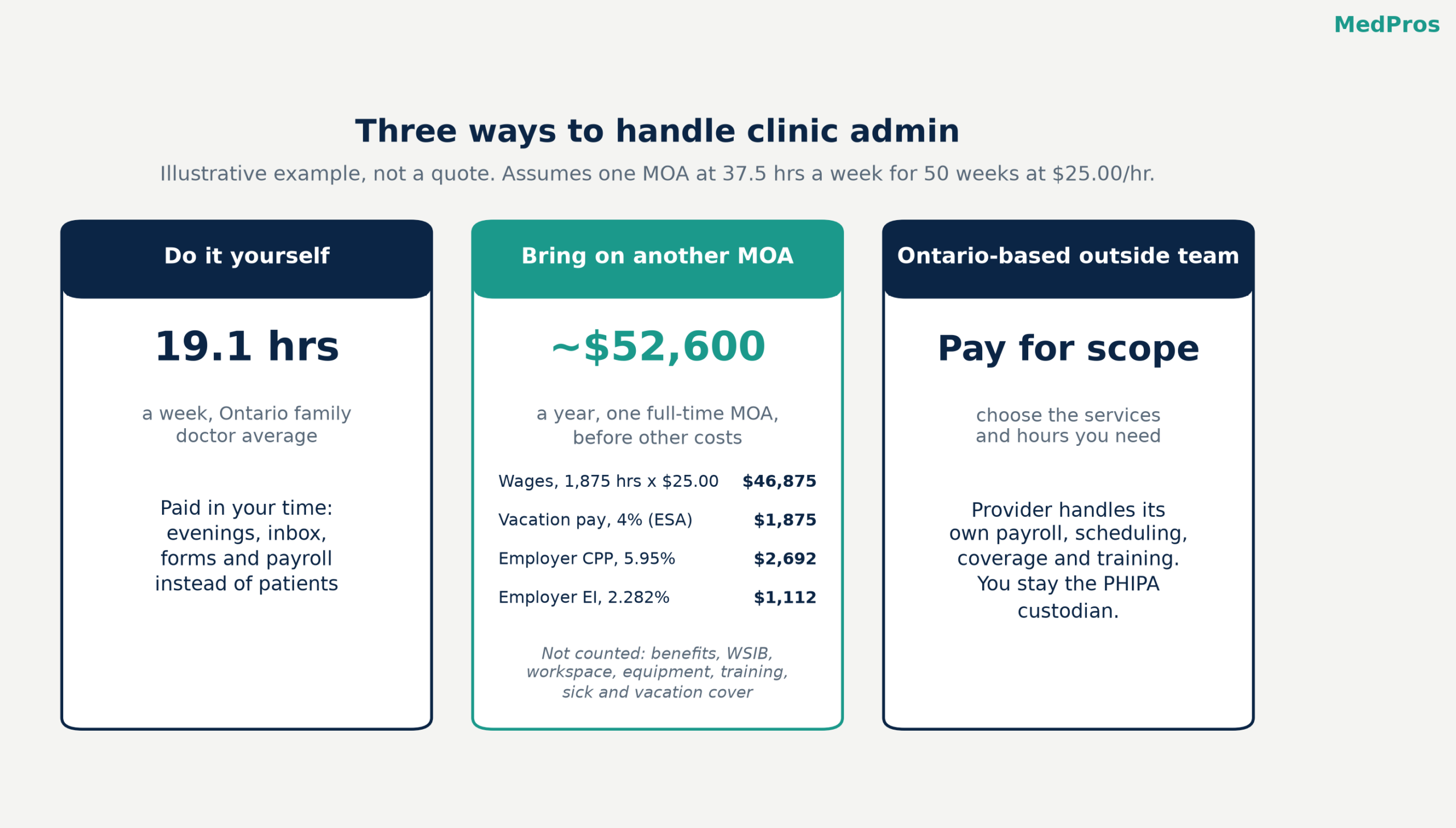
The usual answer is to add another medical office assistant (MOA). The median wage for medical administrative assistants in Ontario is about $25.00 an hour.
Illustrative example: one full-time MOA at 37.5 hours a week for 50 working weeks earns $46,875. Add 4% vacation pay, the minimum under Ontario’s Employment Standards Act ($1,875), employer CPP at 5.95% above the $3,500 basic exemption ($2,692) and employer EI at 1.4 times the 1.63% rate deducted from the team member’s pay ($1,112). That is about $52,600 a year before benefits, WSIB, workspace, equipment, training, and cover for vacation and sick days. Your own numbers will differ.
The headaches of an in-house admin team
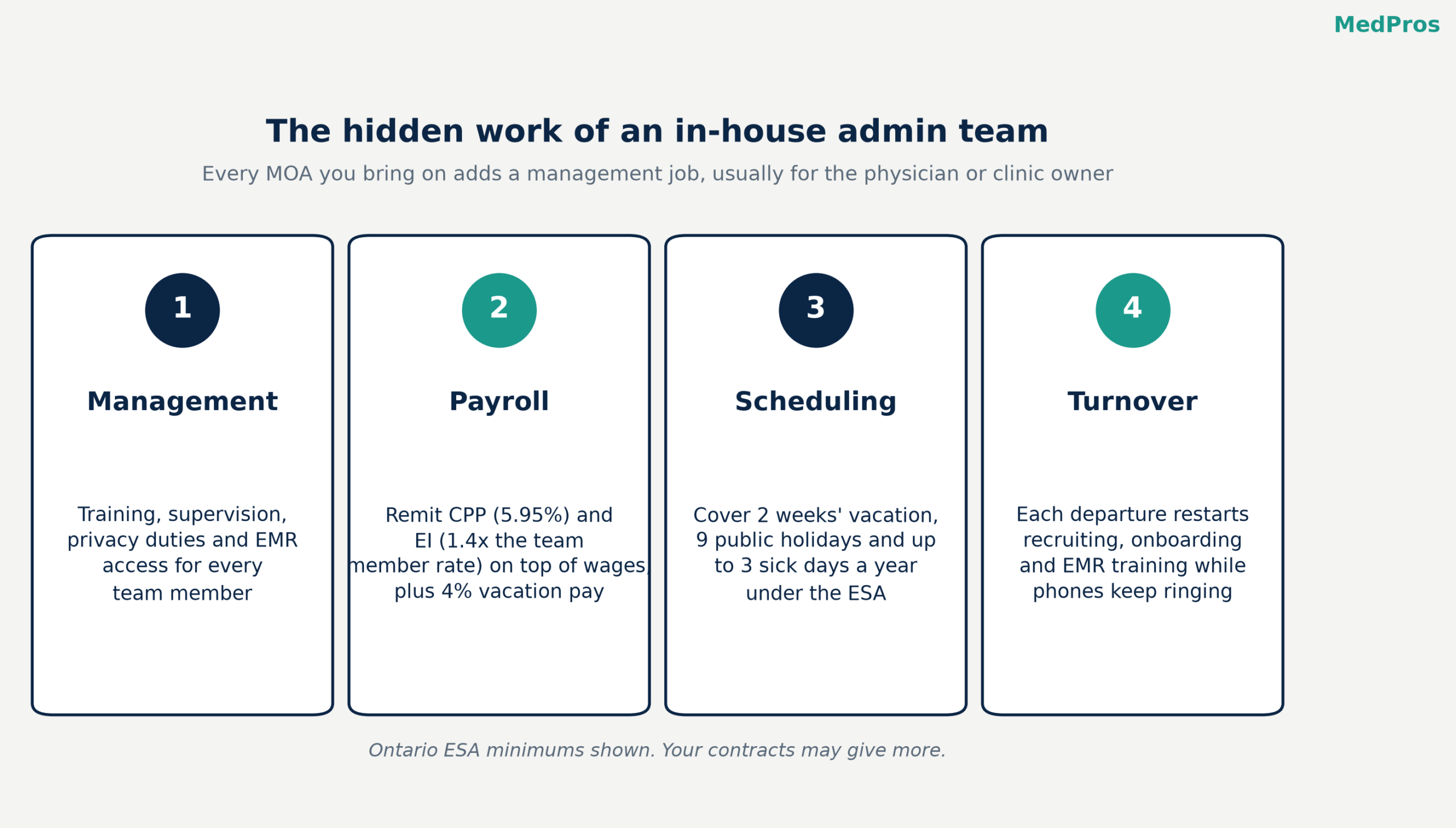
Every MOA you bring on also brings a management job, and in many clinics it falls to the physician or owner.
- Management: training, supervision, EMR access and privacy duties. Under PHIPA, a custodian’s contact person is expected to make sure everyone acting for the clinic knows their privacy duties.
- Payroll: you remit CPP and EI, both your share and the team member’s share, on top of wages and vacation pay.
- Scheduling: the ESA sets minimums of two weeks’ vacation, nine public holidays and up to three days of job-protected sick leave a year. Someone has to cover the phones each time.
- Team turnover: each departure restarts recruiting, onboarding and EMR training, while the inbox keeps filling.
Why more clinics are turning to outside experts
If a quarter of physician admin does not need a physician, the question becomes who does it. Family doctors have called for more financial support for administrative team members, and physicians across Canada rank reducing admin burden as their top retention priority.
An outside clinic admin team works within a scope you set: phones and booking, EMR inbox and referral filing, recalls, billing follow-up, and the schedules and payroll inputs for your in-house team. The provider recruits, trains, supervises and covers its own people, so a sick day or a resignation is their problem to solve, not yours. Clinical questions and decisions stay with your clinical team.
Why choose a local Ontario company
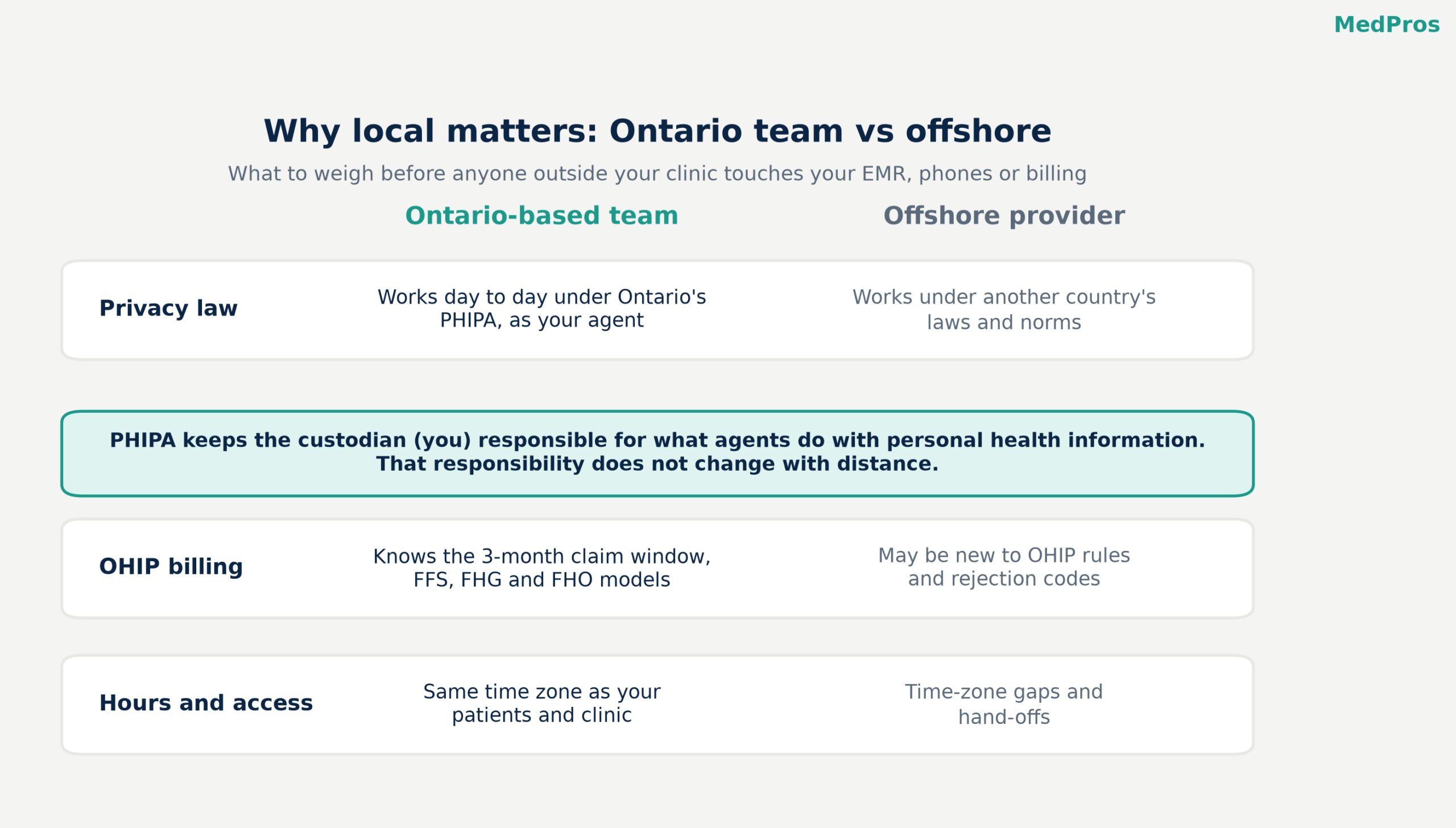
Not all outside help is equal. Before anyone outside your clinic touches your EMR, phones or billing, three things are worth weighing.
- PHIPA responsibility stays with you. Under Ontario’s Personal Health Information Protection Act, anyone handling personal health information on your behalf is your agent, whether or not they are on your payroll. The custodian remains responsible for what its agents do with that information.
- No offshoring. A team based in Ontario works day to day under the same privacy rules, expectations and time zone as your clinic and your patients.
- Ontario billing knowledge. Since April 1, 2023, OHIP fee-for-service claims must be submitted within three months of the service date, and late claims are rejected as stale-dated. A team that knows OHIP, and FFS, FHG and FHO models, catches problems before that window closes.
Good questions to ask any provider: Where is your team located? Will anyone outside Canada access our EMR? Who supervises the work? How do you handle privacy training and access? Which OHIP billing models do you work with?
Where MedPros fits
MedPros has supported clinic setup and operations for more than 20 clinics across Ontario. Our Virtual Clinic Management service is Proudly Ontarian: a 100% Ontario team, no offshore call centres, working in the EMR you already use. The work is non-clinical admin only.
What MedPros aims for with a clinic is to move physician admin from around 19 hours a week toward 8.6 hours, close to what family doctors say would be ideal. That is our target, mapped to each clinic during a check-up, not an industry figure.
Curious where your clinic’s admin hours go? Book a free clinic check-up, or email info@medpros.ca.
Want our monthly MedPros Insider newsletter? Email info@medpros.ca and ask to be added.